2025 Finishes at 72.3% Occupancy with an ADR of $213
San Diego continues to rank among California’s strongest hotel markets, with 12-month occupancy holding above 70% and finishing at 72.3% through December 2025.
The momentum that carried the market through late 2024 and early 2025 has begun to moderate. Softer domestic leisure demand, combined with reduced government-related travel, contributed to weaker performance during peak months. For the 12 months ending October, RevPAR fell 0.9%, signaling soft summer results and a cooling trend following last year’s strong gains. Market participants also note a cooling trend in theme-park visitation and a normalization of cruise-related hotel demand after a surge in early 2024.
Looking ahead, RevPAR is expected to turn moderately positive in 2026; however, the combination of new hotel supply and modest demand growth will continue to put pressure on performance. At the same time, downside risks to the forecast remain elevated, driven by slower consumer spending, broader economic uncertainty, and continued softness in government and leisure travel.
Key Takeaways: San Diego Hotel Market 2025-2026
| Metric | 2025 Performance | 2026 Outlook |
| Occupancy | 72.3% | Modest growth expected |
| ADR | $213 | +1.5% growth |
| RevPAR (12 mo ending Oct) | -0.9% | +1.5% growth (net of taxes) |
| Supply Growth | +1,600 rooms (Gaylord) | +1,200 rooms (1.8% increase) |
| Demand Drivers | Conventions, leisure, military | World Cup (Q2), stronger convention bookings |
| Investment Volume | $334M | Cautious but steady |
| Cost Pressures | Rising labor, utilities | Minimum wage → $25/hour |
What Drives San Diego’s Hotel Demand?
San Diego benefits from a well-rounded economic base anchored by life sciences, military operations, higher education, and a globally recognized tourism sector.
Convention planners report a stronger booking pace for fiscal year 2025-2026, driven by returning medical, biotech, and scientific meetings—segments that historically deliver some of the city’s highest room-night yields.
Comic-Con Confirmed Through 2026 – Hotel Affordability a Concern
Comic-Con, the city’s signature convention, is confirmed to stay through 2026. However, concerns about Comic-Con’s affordability have emerged, with rising room rates and limited budget lodging options challenging its long-term viability. The event typically attracts more than 135,000 attendees and remains a key annual demand driver.
Hotel Development: The Gaylord Effect and What’s Next
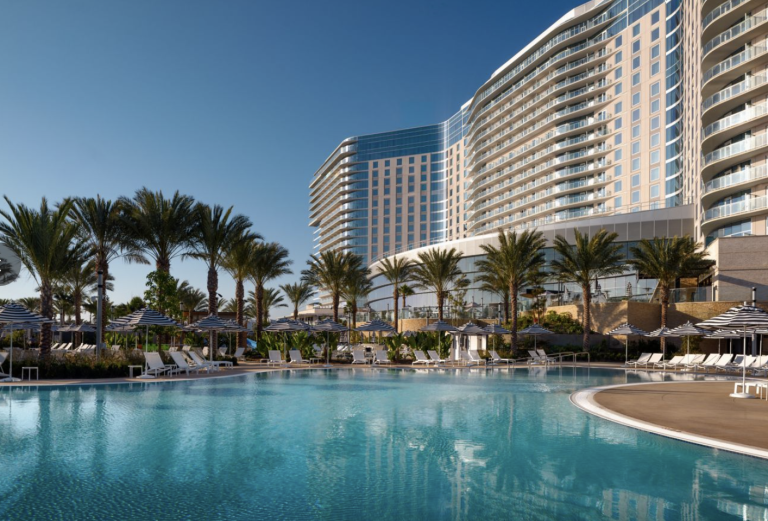
Hotel development activity is constrained by high construction costs, stringent regulations, and strong community input. Despite these hurdles, notable projects are moving forward. The most prominent addition was the 1,600-room Gaylord Pacific Resort in Chula Vista, which opened in May 2025 and meaningfully expanded regional capacity. Beyond that, 9 hotels totaling 1,200 rooms are under construction, equivalent to a 1.8% supply boost by 2027.
Among the major submarkets, the South/East posted the sharpest slowdown, driven primarily by the significant increase in supply following the opening of the Gaylord Pacific Resort. Mission Valley followed with a similar cooling pattern.
San Diego Hospitality: Performance by Segment
Leisure Travel Cools After Strong Run
Leisure travel continues to anchor San Diego’s hotel demand, though this segment has cooled in recent months. Through December 2025, RevPAR declined 2.8% over the trailing 12 months, driven by a deceleration in occupancy.
Weekend travel, which typically accounts for roughly one-third of total room nights, softened noticeably over the summer. Both weekday and weekend RevPAR slipped into negative territory, reflecting increased caution among leisure and corporate transient travelers. Many shifted their spending toward cruises, short-term rentals, or shorter hotel stays as they adjusted personal travel priorities and responded to tighter corporate budgets. Even so, San Diego continued to outperform many other leisure-oriented markets thanks to its mild climate and year-round attractions.
Weekday Demand: Life Sciences Help, But Headwinds Persist
Earlier in the year, weekday demand had played a more stabilizing role. The gradual rebound of business travel, particularly from the life sciences sector, where remote work is less feasible, helped support midweek occupancy. However, weakness across domestic leisure and government-related travel, combined with broader economic uncertainty, created persistent headwinds that limited further gains on weekdays.
Group Business Rebounds & Convention Center Leads the Way
Group business, roughly 30% of overall demand, rebounded somewhat in the first half of 2025 following a disappointing 2024. The San Diego CBD, heavily reliant on the 2.6 million-square-foot San Diego Convention Center, was hardest hit during the downturn, though 2025 brought renewed momentum.
Despite mixed performance, the CBD remains the top submarket for ADR and ranks second for RevPAR. San Diego/La Jolla leads in ADR and sits close behind in RevPAR performance. Downtown also continues to achieve some of the region’s highest occupancy rates, even with a hotel inventory that is 2 to 3 times larger than most other submarkets.
Overall, San Diego’s performance picture reflects resilience but also emerging cracks, as softening leisure demand and weaker government travel temper an otherwise broad base of room night drivers.
San Diego Hotel Investment: Steady Appetite, Cautious Volume
On the investment side, San Diego continues to attract buyers. Hotel sales in the 12 months through December 2025 totaled $334 million, well below the three-year average of $501 million but consistent with cautious trends nationwide. Investor appetite remains steady given the market’s strong fundamentals, though pricing and financing constraints limit transaction volume.
2026 San Diego Hotel Forecast
Modest Growth, But Costs Are the Real Concern
2026 will start out slowly due to some tariff hangovers, slightly elevated interest rates, and difficult comps with 2025 in Q1. By Q2, business will pick up with the World Cup, bringing international travel back for the first time in over five years. Q3 and Q4 have easier comps, and the economic environment should be clearer.
Look for modest RevPAR growth driven by almost 2% supply growth, 2% demand growth, and 1.5% ADR growth. This net RevPAR growth of 1.5% would have been higher were it not for the additional taxes that do not benefit the traveler.
The Hidden Tax Drag on San Diego Hotels
These taxes are 1.25%, 2.25%, and 3.25%, depending on location, downtown, and surrounding submarkets at 3.25%. Unfortunately, hotel guests in San Diego are paying this; the money was earmarked for a San Diego Convention Center expansion and to address homelessness. Now, it sits there in an escrow account, impacting hotel guest costs without benefitting anyone. Without this fee, RevPAR growth would likely be 3%.
The Real Concern for Hoteliers: Rising Costs
The real concern for hoteliers in San Diego will be costs. The new Minimum Wage bill begins to drive the wage toward $25 per hour this year. Costs of labor, insurance, water, sewer, and energy will exceed any revenue gains.
The 2026 outlook shows improvement in several areas, with the World Cup expected to bring a much-needed boost to international travel in Q2. Convention bookings are strengthening, the market’s year-round appeal continues to attract visitors and tax relief and interest rate cuts will help.
Stay ahead this year with all my new content:
For a deeper dive, read my 2025 San Diego submarket performance. To get all content delivered to your email each month, sign up for my monthly newsletter.