Exploring hotel development opportunities in San Diego, or any major market, starts with one critical question:
Should you buy an existing hotel or build one from the ground up?
Based on decades of hotel development experience, particularly throughout Southern California, this guide breaks down the real financial, market, and operational considerations investors must understand before committing capital.
As Conrad Hilton famously said, “The three most important things in hotel development are location, location, and location.”
That truth still holds, but today, success also depends on feasibility, capital structure, and execution.
Buy or Build a hotel in San Diego: What’s the Right Move?
Start with your capital resources.
The average hotel in San Diego is roughly 100 rooms, with values exceeding $200,000 per key. A $20 million project is common.
If you’re contributing $2 million in equity, you’ll likely need:
- A construction or acquisition loan covering the remaining $15–16 million
- Additional equity partners contributing $2–3 million
Buying an existing hotel comes with speed and (sometimes) less construction risk. But you need to know what you’re getting into. If the building has structural issues or deferred maintenance, you could be spending $2–4 million just to stay competitive in a few years.
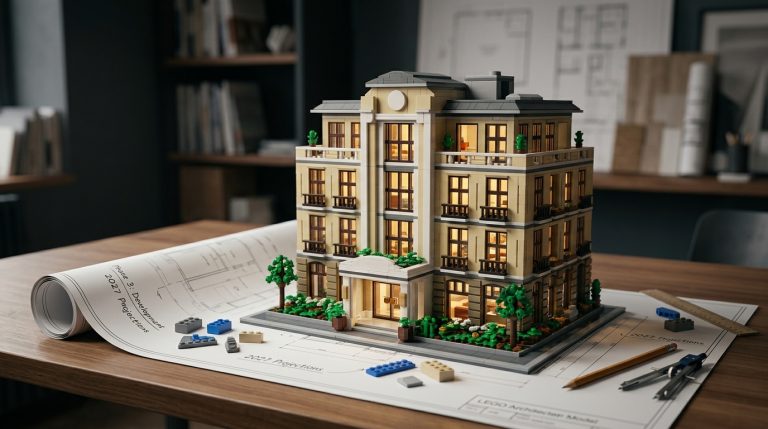
If you’re building, you’ll need a contractor, an architect, and a hotel feasibility study before a shovel ever hits the ground.
The single most important thing is to have a team to advise you. Don’t try to go it alone.
Buying an Existing Hotel
Buying offers speed and reduced entitlement risk, but it isn’t risk-free.
Hidden issues often include:
- Deferred maintenance
- Structural deficiencies
- Outdated systems or layouts
It’s not unusual to spend $2–4 million post-acquisition just to remain competitive.
Building a New Hotel
New development requires:
- A qualified hotel architect
- An experienced contractor
- A comprehensive feasibility study
Before a shovel hits the ground, lenders will require proof the project works financially, not just conceptually.
The single most important factor in either path:
Build the right advisory team early.
Always Start With a Hotel Feasibility Study
In San Diego, feasibility studies must account for:
- Year-round leisure demand
- Corporate and biotech travel
- Convention and group business
- Seasonal vs. stable occupancy
A proper feasibility study answers critical questions:
- What existing and future supply exists?
- Are new hotels entering the market nearby?
- What demand segments dominate?
- Is branding necessary or is independent viable?
If you’ve never completed feasibility work before, hire someone who has. This step determines location, product type, and financial viability.
Picking the Right Hotel Product for San Diego
The San Diego market is unique in that it supports a wide range of hotel types, from economy motels near the Interstate freeways to upscale lifestyle brands in the Gaslamp Quarter. Not every product works in every submarket.
Here’s how different hotel types fit local demand:
| Hotel Type | Best Fit in San Diego | Pros | Cons |
| Extended Stay | Kearny Mesa, Mission Valley | High flexibility; long-term guests | Higher construction cost |
| Full-Service | Downtown, La Jolla, Del Mar | Brand recognition, group amenities | Complex operations |
| Limited-Service | Airport, SDSU, suburban corridors | Efficient, steady margins | Less differentiation |
| Independent Boutique | North Park, Hillcrest, beach areas | Design freedom; neighborhood fit | Financing challenges |
Extended stay properties also offer exit flexibility, as they can convert to apartments or senior living if market conditions change.
I always say that if the market is strong, people are traveling there, and you can find a product that’s popular now, you’ve got a good match.
Valuation, Hotel Cap Rates, and the Risk You’re Taking
I’ve seen firsthand how hotel valuations in San Diego can swing dramatically depending on shifts in NOI and cap rates. It’s about the value of the asset. Divide your net operating income by the capitalization rate.
Understanding capitalization rates (cap rates) is critical to hotel investment. In San Diego, cap rates typically range from 6% to 8%, depending on submarket risk, interest rates, brand, and recent performance.
- If your net income after taking a 4% reserve for replacement is $1M and the cap rate is 6%, your property is worth $16.66M
- If income drops to $500K and the cap rate rises to 8%, it may be worth only $6.25M

This isn’t theoretical. It’s what happens during downturns. Be prepared. On the other hand, if you persevere through the tough times, the NOI may increase to $1.5M, and your value will rise to $25M.
According to a recent CoStar article, capital hasn’t left the hotel development table but it’s simply gotten smarter and far more selective. Lenders are still financing projects, but they’re demanding lower leverage, stronger sponsorship, and clear line-of-sight to stabilized cash flow, which means only the most disciplined deals are moving forward.
Final Thought: Build the Right Team
Hotel development is not a solo endeavor. You need:
- An equity partner (unless you’re funding it all)
- A lender who understands hospitality
- A contractor and architect with hotel experience
- A hotel feasibility expert
- A management team (or someone who can bring one in)
I’ve worked on dozens of hotel projects across California, including:
- Hilton Hotel Santa Clara
- Homewood Suites by Hilton Del Mar
- Hilton Garden Inn Del Mar
- Del Mar Marriott
Thinking About Buying or Building?
If you’re thinking about whether to buy or build a hotel in San Diego (or anywhere), I’d be happy to help!
See hotel development projects I’ve worked on → Development Projects
FAQs
Q: Have hotel construction costs changed in 2025-2026?
Answer: Yes. Tariffs, interest rates, and material costs have increased development challenges, making feasibility and cost controls more important than ever.
Q: What’s the biggest mistake first-time hotel investors make?
Answer: Skipping feasibility work or assembling an inexperienced team. Hotel development complexity—especially zoning, demand modeling, and operations—is consistently underestimated.